Every instrument works, and nobody can fly the plane
Picture a cockpit where every instrument works, and each one sits in a different room with a different owner. The altitude, the fuel and the engine temperature are all accurate. Nobody can fly safely, because nobody sees them together. Many large AI programs run this way. The project manager keeps a log of risks, assumptions, issues and dependencies. The security architect tracks open findings from the last penetration test. The chief information security officer reviews a vulnerability dashboard the project manager has never seen. The compliance director follows obligations in a spreadsheet Legal owns. Each of them manages real risk, in a separate vocabulary, on a separate calendar.
When a program fails, the review afterward usually finds that the warnings were there. The fragmentation is real, and it is a symptom. The risk itself was set earlier.
The failure is set when the work is scoped and owned
In June 2025 Gartner predicted that more than 40 percent of agentic AI projects will be canceled by the end of 2027, citing rising costs, unclear business value and inadequate risk controls. Outcome-Owned Architecture, the method developed by Jamie Bernard and William Haas Evans, traces most such failures to one cause: the work was scoped and owned badly before any technology was chosen.
The method names three ways that failure appears. Agents bought along the lines of the existing org chart rebuild the old silos in a smarter form, with the same seams between them. A person who approves nearly everything an agent does becomes a rubber stamp, and within a few years loses the practice needed to catch the rare real error. The workforce finds out last, after the software is live, at a cost in trust that can rival the cost of the software. No risk register catches any of the three, because each is designed into the work.
Risk is decided one decision at a time
Outcome-Owned Architecture sorts the work by decision instead of by task, and places each decision in one of three classes. Agent-owned decisions are routine, and being occasionally wrong costs little, so software runs them from start to finish. Boundary decisions involve a real obligation, such as a regulation or a separation of duties, so software prepares the decision and a named person makes the call. Human-owned decisions are genuinely uncertain or need someone accountable, so software lays out the evidence and a person decides.
Two questions set what a wrong automated call costs. The first asks whether the agent acts, by sending, pricing or booking, or only informs a person who then acts. The second asks whether the call is bounded by a rule or requires real human judgment. The same error costs far less when the agent only informs than when it commits.
Price the return, then screen the boundary
The method ranks the work by one number, its yield: the value of the labor cost avoided, divided by the cost of the software plus a charge for risk priced by those two questions, written ρ = V / (C + R). The number decides what moves first. It also exposes a cost most business cases leave out. Once software takes the routine work, the people who review the rest become the bottleneck, and the model sizes their load openly.
A high yield does not settle the matter. Every boundary is screened first through three questions from PRISM, the risk framework I developed. Would automating this give the software authority well beyond its job? Would it send sensitive data to a model without masking it? Is it an automated decision about a person, with no review and no explanation? A yes to any of them stops the change until a sign-off step, masking or a review is in place.
Scores replace "likely"
Risk conversations break down on their words. In a study of 881 readers, Sanne Willems, Casper Albers and Ionica Smeets found that for most probability phrases the numbers people assigned spanned 30 to 40 percentage points, and readers took "probable" to mean anything from 40 to 95 percent. Two executives can agree that a risk is likely and leave the room meaning different things.
Claude Shannon showed in 1948 that information is what reduces uncertainty. PRISM applies that idea to a program. It takes the status report and separates it into nine dimensions, each scored from 0, controlled, to 100, unknown. Four belong to the chief technology officer: scope, architecture, delivery and organizational capability. Four belong to the chief information security officer: integration and third parties, cybersecurity, compliance, and data and AI governance. The ninth, operational resilience and business continuity, belongs to both. An unassessed program sits at maximum uncertainty. A scored one lets a team say that integration risk is at 72, the API contract is unsigned and there is no fallback, and that sentence leads to a decision.
PRISM grew out of more than a decade of large programs, including a connected medical device program at a global pharmaceutical manufacturer where clinical, regulatory, technology and commercial work all had to meet a submission date. Its profile shows which lens is driving the risk. Gates agreed in advance turn a score into action: a cybersecurity score of 70 or above stops the program at the gate. Naming risks this exactly also lets a team name its appetite, and accept a high score on purpose when the upside justifies it.
These remain human decisions
The pressure on all of this has grown. In April 2026 Anthropic reported that its unreleased Claude Mythos Preview model had found thousands of high-severity vulnerabilities, including flaws in every major operating system and web browser. The European Union has fixed December 2027 as the date its AI Act's obligations for high-risk systems apply. Tools that find weaknesses are getting faster, and the rules now have dates.
None of it makes the judgment automatic. Deciding what software owns, pricing what a wrong call costs and scoring the program are ways to put the right information in front of the right people while there is still time to act. The decisions themselves stay human, made better by clearer information and a common frame.
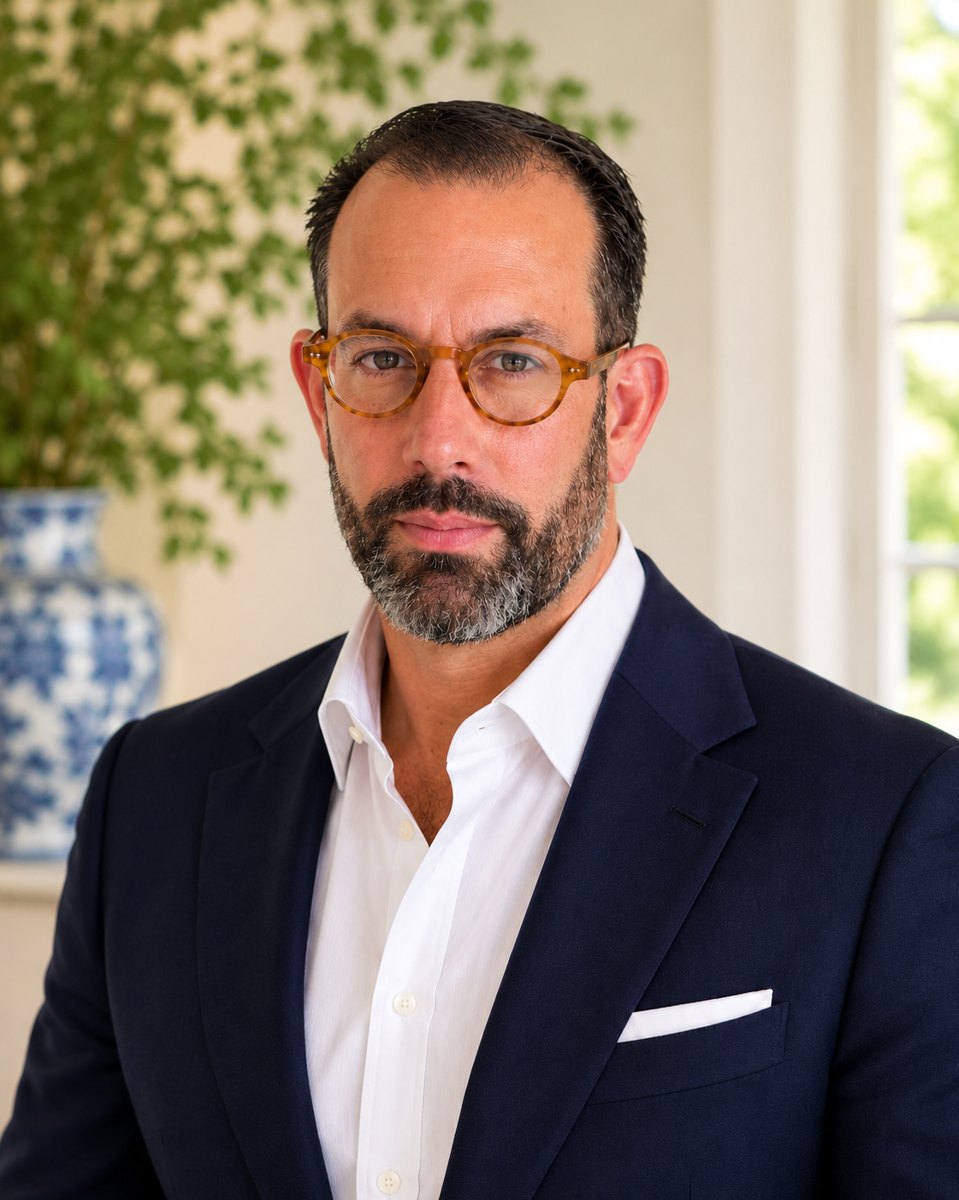
William Haas Evans
Founder and chief strategy officer of Fugue Strategy Advisors. He works with leadership teams on strategy design, strategic foresight and organization design. More about William
References (7)
- Jamie Bernard and William Haas Evans, Outcome-Owned Architecture, working draft v1.7.1we, Fugue Strategy Advisors, 2026.
- Gartner, "Gartner Predicts Over 40% of Agentic AI Projects Will Be Canceled by End of 2027," press release, 25 June 2025.
- Sanne J. W. Willems, Casper J. Albers and Ionica Smeets, "Variability in the interpretation of probability phrases used in Dutch news articles: a risk for miscommunication," Journal of Science Communication 19, no. 2 (2020).
- Claude E. Shannon, "A Mathematical Theory of Communication," Bell System Technical Journal 27 (1948).
- Anthropic, "Project Glasswing," 7 April 2026.
- Regulation (EU) 2026/1744 (Digital Omnibus on AI), amending Article 113 of the AI Act; in force 27 July 2026.
- PRISM (Portfolio and Program Risk Intelligence, Scoring and Monitoring) is the work of William Haas Evans.