Founder and Chief Strategy Officer, Fugue Strategy Advisors
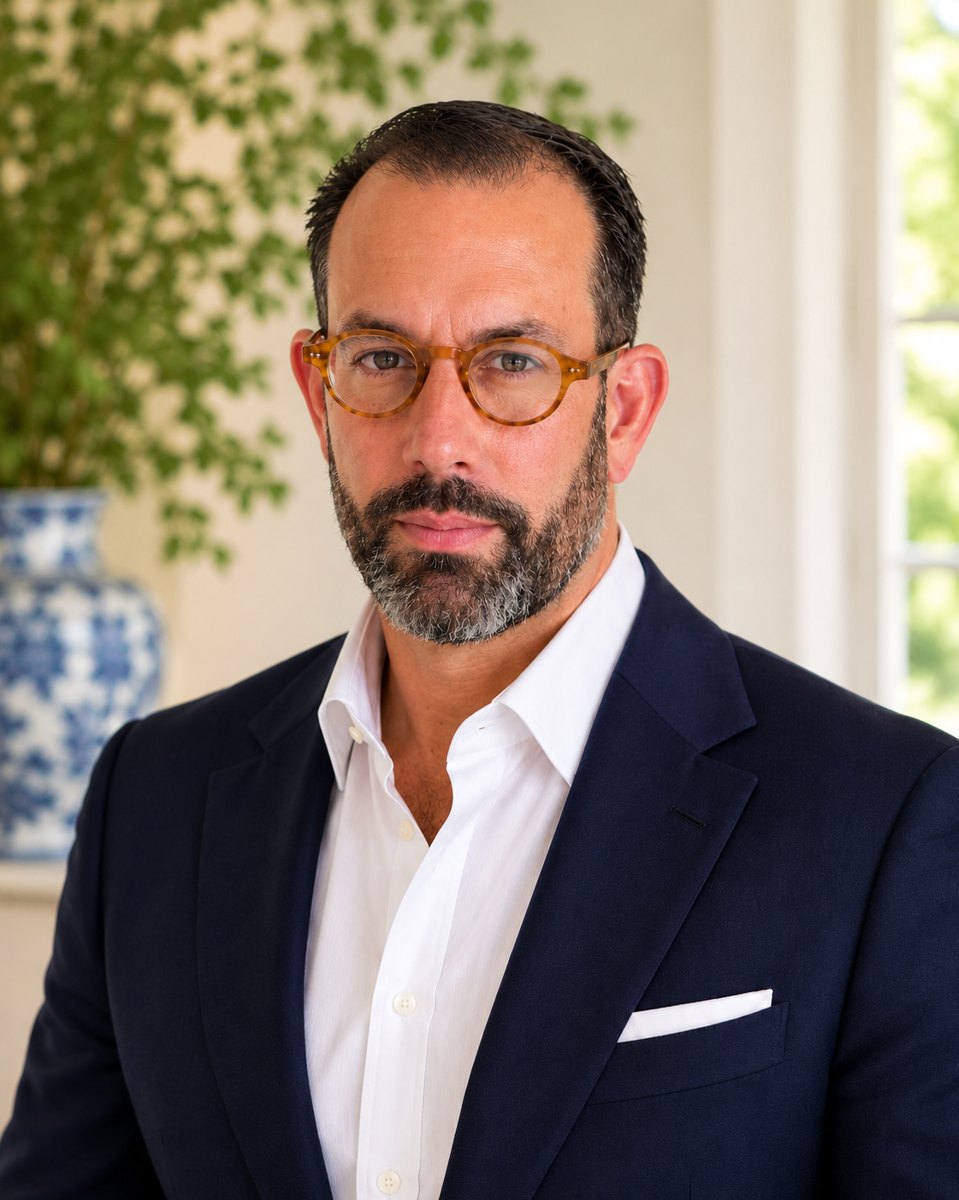
Will advises executive and leadership teams through strategic foresight, strategy design and organization design: anticipating where their market is going, deciding where to compete and how to win, and redesigning the operating model that delivers the strategy.
As founder and Chief Strategy Officer of Fugue Strategy Advisors, William Haas Evans advises executive, leadership and operational teams, from Fortune 50 enterprises to specialist data companies.
His work opens on the constraint that governs the result, which is more often a policy, a governance process or a decision queue than a shortage of capacity. He redesigns the decisions, the accountability and the measures around it, and prices the result so the investment stands up in a finance review.
Will came to strategy through design. He was the first head of product design at Kayak.com and spent more than a decade in New York City, including four years as Design-Thinker-in-Residence at NYU Stern. Design, jazz and poetry are, for him, the same craft: making coherent form while the outcome is still open.
He founded ForesightOps and created PRISM. Outcome-Owned Architecture and the Outcome Earned Economic Model are the work of Jamie Bernard and William Haas Evans.
Will lives in Boca Raton with his wife, Rabbi Laila Haas, and their son, Asher.
Will has spoken at SXSW, TEDx, Agile Alliance, QCon and the DevOps Enterprise Summit. Five Fugue keynotes are available for conferences and executive programs, each paired with a workshop.
| 2026 | The One Thing in the Way | Northwestern University, guest lecture |
| 2019 | Designing Resilience | SRVISION, Utrecht, opening keynote |
| 2018 | Empowering Agile Self-Organized Teams with Design Thinking | QCon New York |
| 2017 | Redesigned to Disrupt | UX Alive, Istanbul, keynote |
| 2016 | The Need for Speed | DevOps Enterprise Summit, San Francisco |
| 2016 | Dispositioning Advantage | LeanAgile Scotland, Edinburgh |
Every consequential choice changes the organization that makes it, and it changes the conditions for the choice that follows.
About the bookRequest a briefing
Tell us in a 30-minute briefing, and we'll help you decide where to start.
Request a briefing