
A full room opened the evening by answering one question on a sticky note
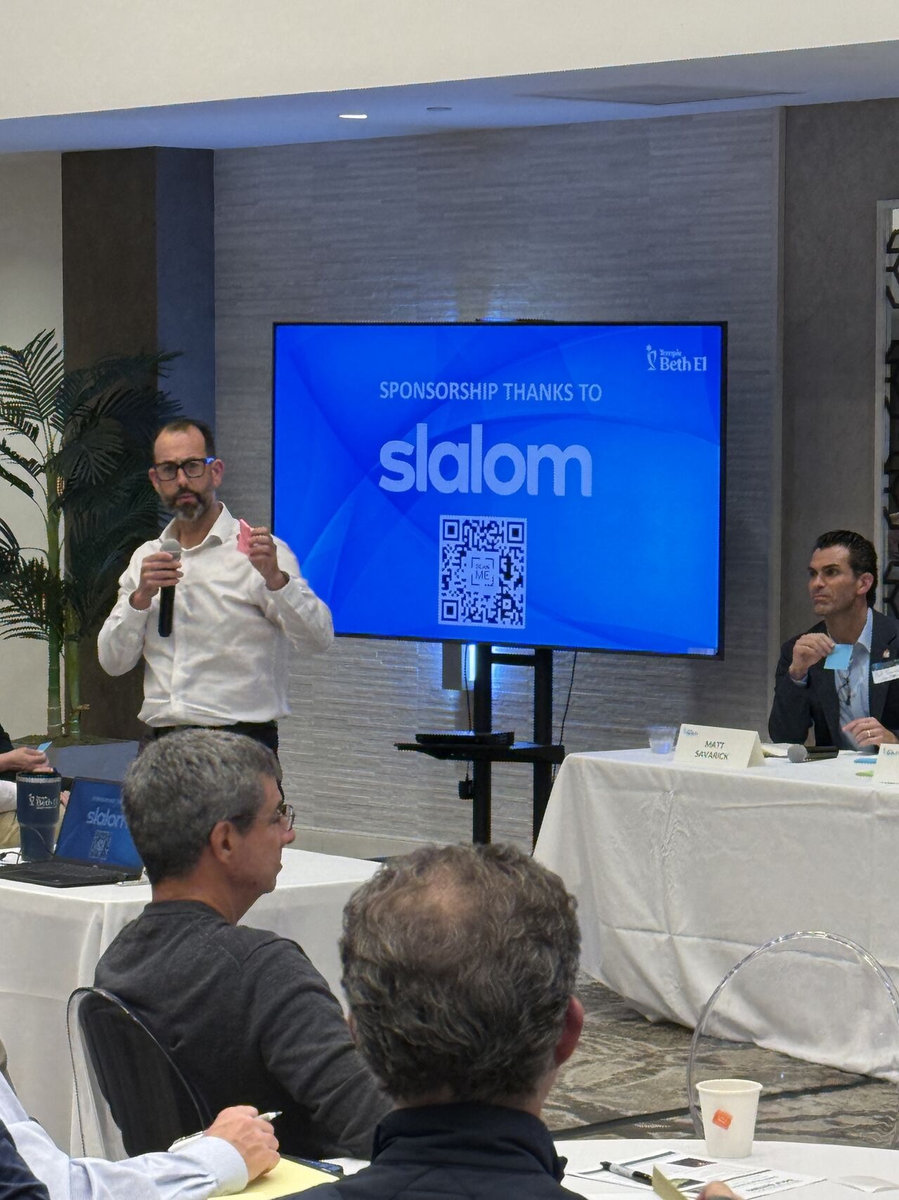
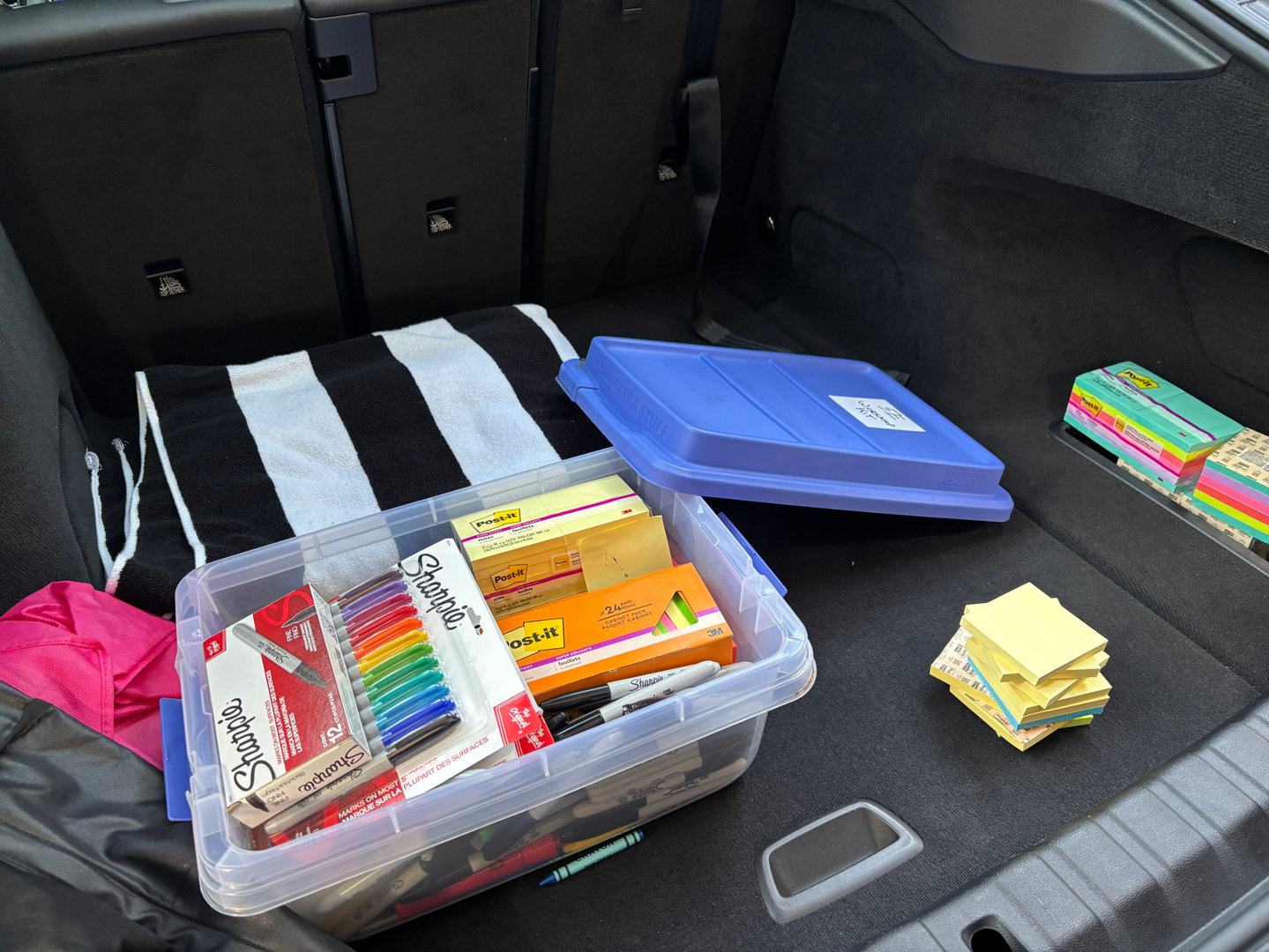
The room was full at 7:30 in the evening when Rabbi Greg Weisman offered the blessing. Temple Beth El's Brotherhood had made the space, Andrew James of Slalom sponsored the refreshments, and the evening was designed so the people in the room would take part from the first minute. After introductions by Steven Schiff, Brotherhood co-president Hayden Trepeck, who had worked to bring the evening together, opened with a single icebreaker question that everyone answered on a sticky note. Each person wrote "AI" in the corner of the note and rated their own understanding of artificial intelligence from one to five. A one meant "What is AI?", and a five meant "I AM Sam Altman (or went to his Bar Mitzvah)."
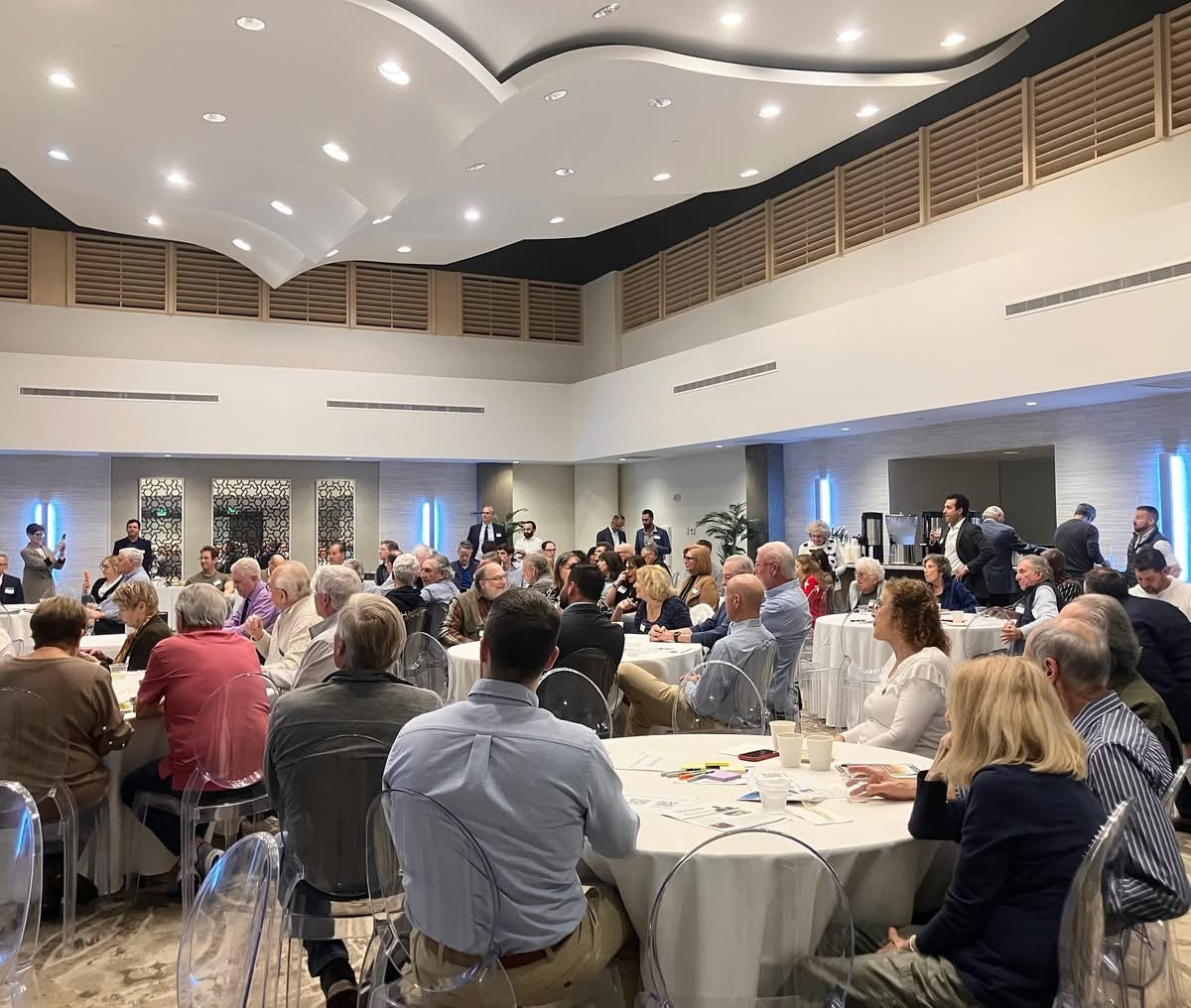
The room started talking at once. The answers also gave us data, and we adjusted the questions for the panel before it began. A low-risk question like that opens an audience and gets a first small commitment to working together.
A short panel set the frame
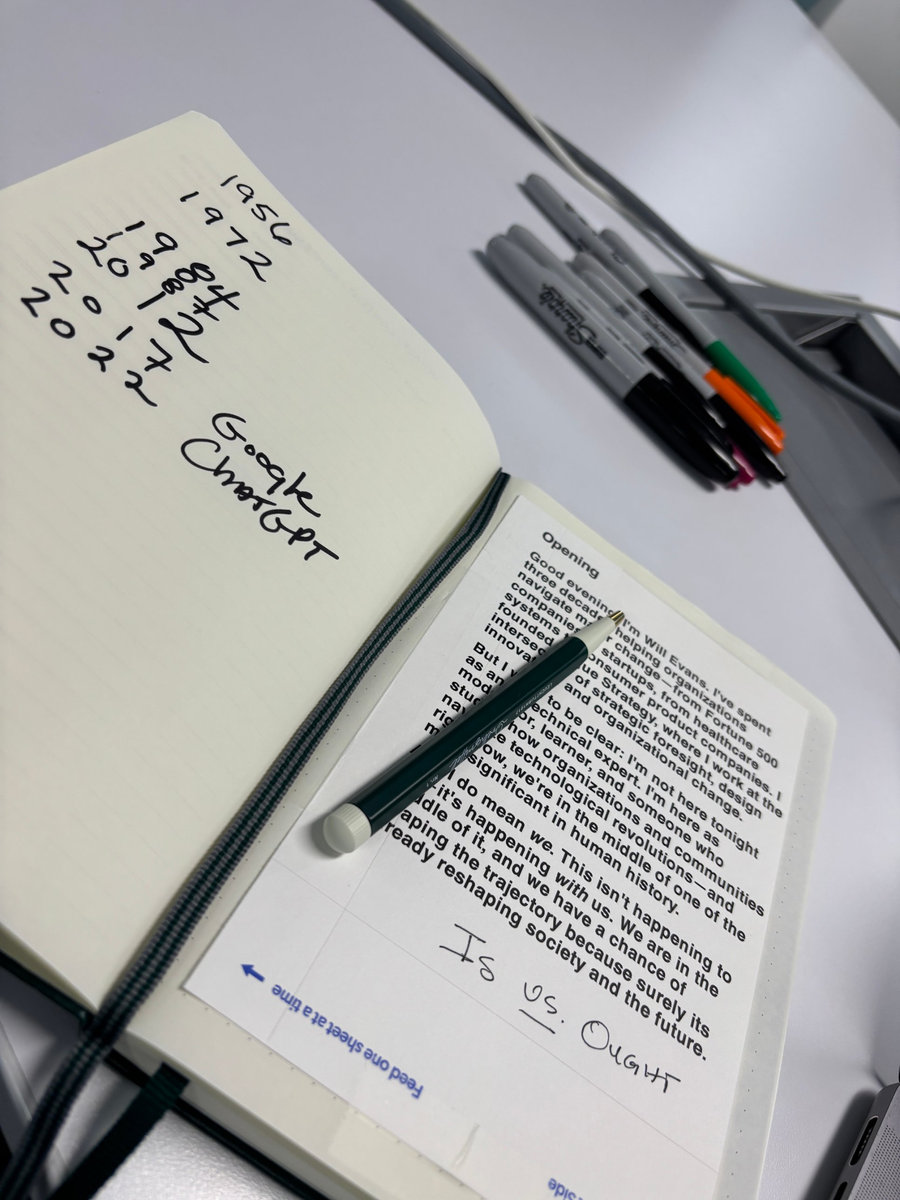
I opened by drawing a line between smart and wise. AI is very good at matching patterns, processing information and optimizing for goals someone has defined. It cannot exercise judgment drawn from lived experience, and it cannot care about consequences. That difference matters most to anyone making decisions that affect other people, which described most of the room.
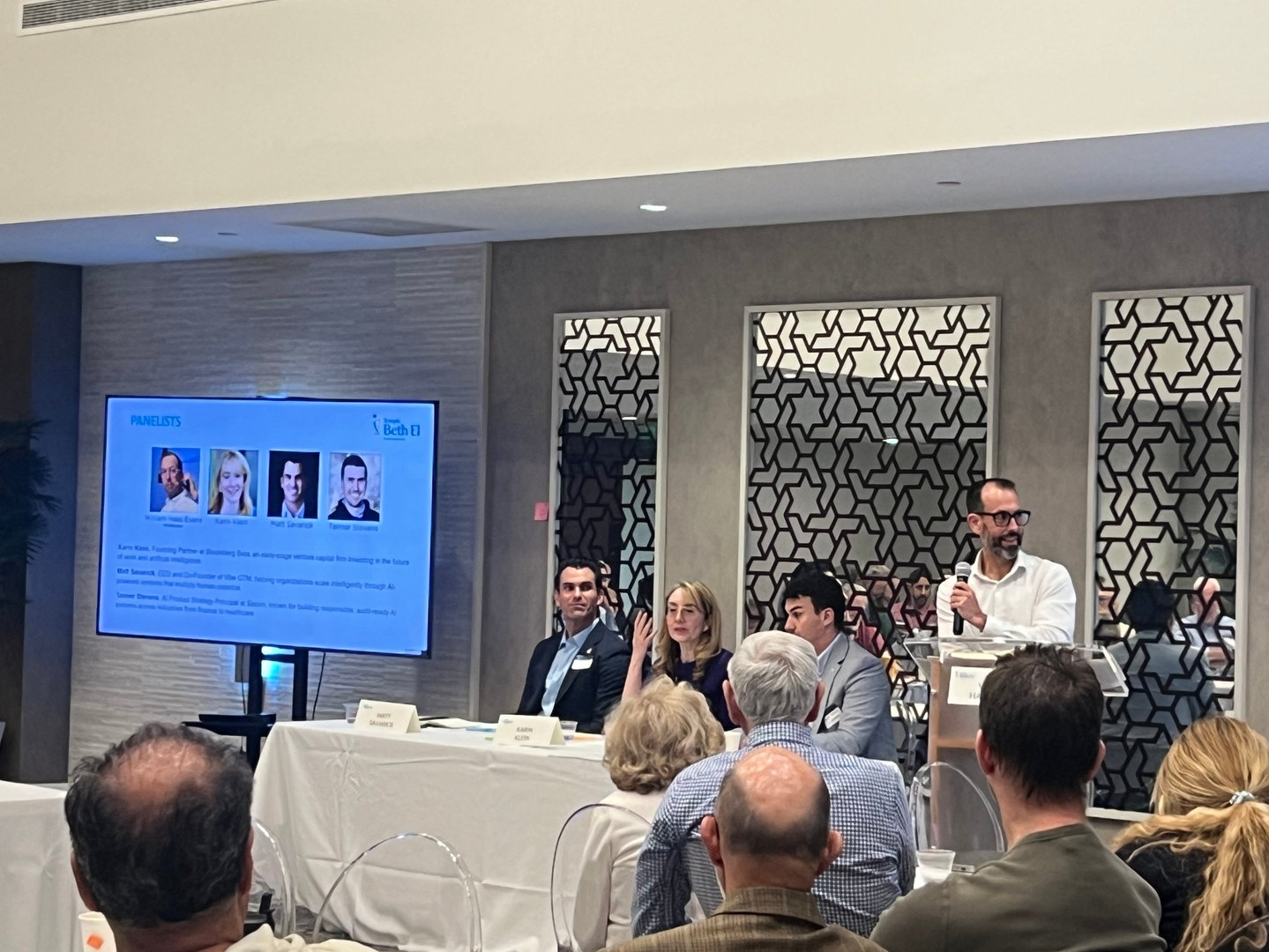
Three practitioners came at AI from different directions. Karin Klein of Bloomberg Beta invests in AI companies and sees where capital flows and why. Tanner Stevens of Slalom builds AI systems for large enterprises and knows what survives in production. Matt Savarick, a serial entrepreneur and chief executive of Vibe GTM, brought both the founder's view and the human side of change.
I prepared twenty-four questions across four frames and used six. The panelists faced the audience and angled toward one another, so the forty-five minutes felt like overhearing a good conversation. We explored where AI creates value today and where it is still mostly promise, why so many organizations stall between a pilot and a production system, and how to tell whether a problem can be solved with current capabilities. The audience raised education, retraining and climate.
The learning happened when people used the tools
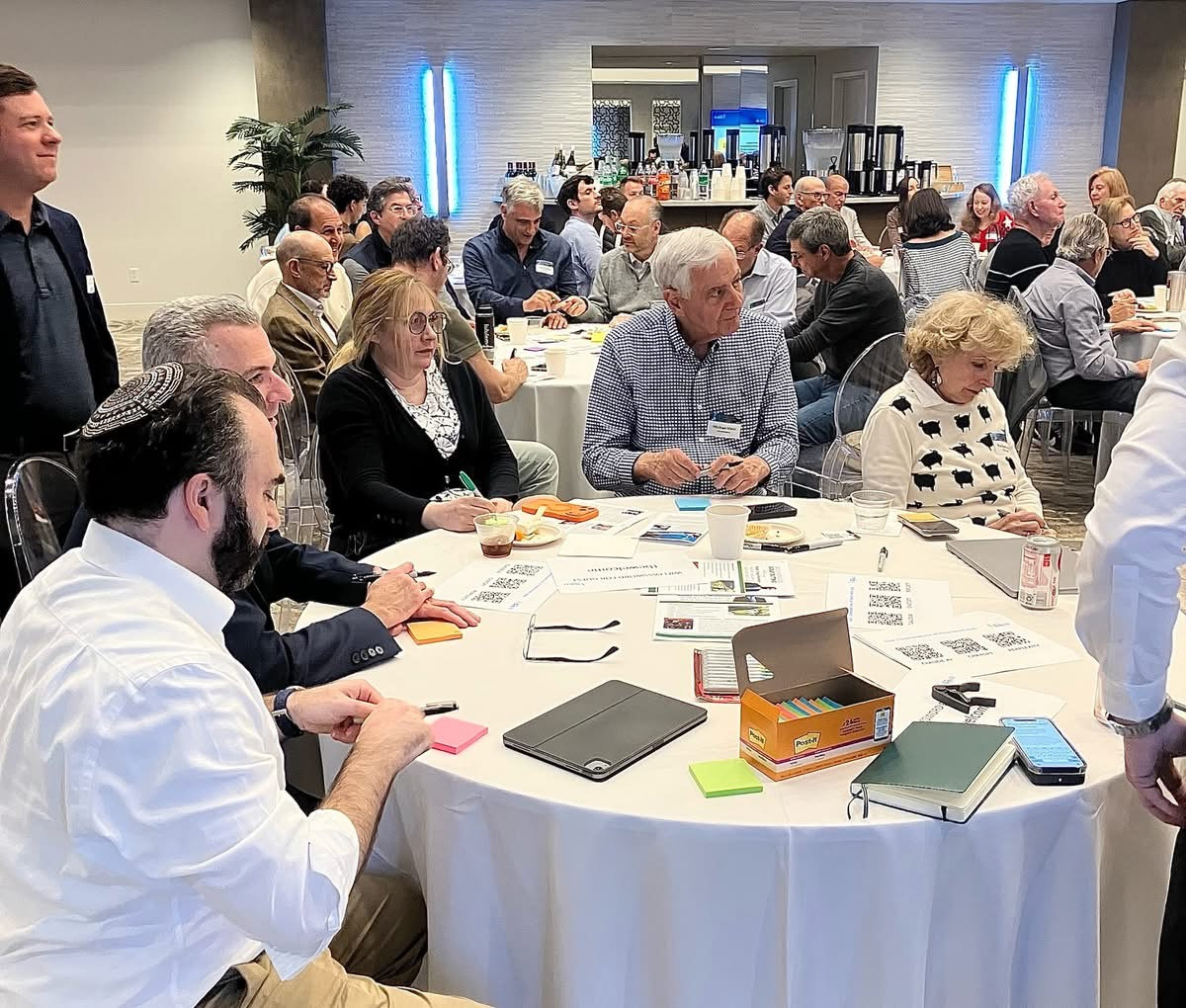
After forty-five minutes the format changed. People moved to round tables with sticky notes, markers and instructions printed as placemats, and worked through seven real use cases. They downloaded AI applications in the room and used them on the problems in front of them. Quick Response (QR) codes on every table gave the wireless password and the download links.
The QR codes became a lesson of their own. Someone pointed out that reading a QR code is machine vision, the same family of technology that lets a car read a street sign. AI stopped being distant science fiction and became something already in everyone's pocket. That was the aim: informed engagement, without wonder or fear. The notes on the tables turned practical: "Good for first drafts, terrible at final versions." "Speeds up research, doesn't replace expertise or judgment."
Once people had used the tools, their questions became specific. They asked less about whether AI would take their jobs and more about when to use it and when to do the work themselves.
The format works when people talk, use the tools and know the purpose
- Choose practitioners who will talk about failure. Look for people who have done the work and can be honest about what failed.
- Keep the panel under forty-five minutes and any talk under eighteen. Give the rest of the evening to hands-on work, group discussion and short read-outs.
- Make the technology tangible. Have people install the applications and test them against real problems, so they see what works and what does not.
- Start from everyday examples. Recommendation engines, voice assistants, fraud detection and email autocomplete show people how much AI they already use, and the conversation turns from fear to assessment.
- Design the room. Set out round tables, sticky notes, markers, name tags and printed placemats. People should talk to one another, with their hands busy.
- Ask someone to frame the purpose. Rabbi Weisman asked us to explore these tools through the lens of our tradition, as a question of judgment, because the consequences can be profound.
- Treat the hosts as partners. Talk with the staff about outcomes, and make the work easy for busy people.
Room for exploration matters more than production value
The quality of an evening like this comes from the space it makes for exploration. Production value matters far less. Trust the audience, because they arrive with good questions. Prime the room with the first questions, then give people room to ask what matters to them and tools to find the answers. The hands-on part has to be real: real applications, real problems and real results. People lose their fear of a technology by using it.
I closed with the questions our tradition asks of any powerful tool. How do we use it responsibly? How do we create value without causing harm? How do we keep what makes us human while we gain what makes us more capable?
South Florida needs more of these conversations. The method is simple: gather good people around good questions, set light constraints, give them space and tools, and let them learn by doing.
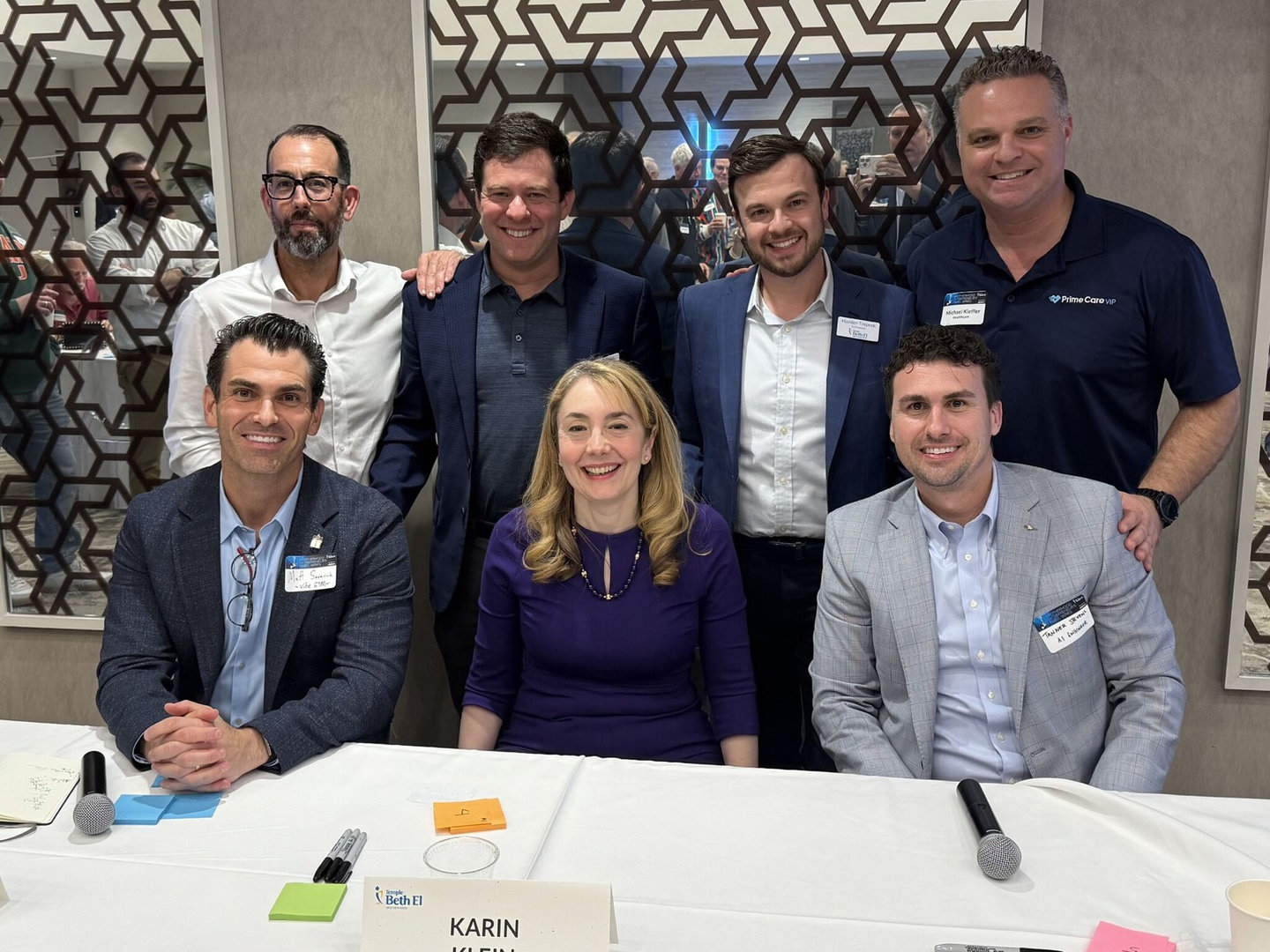
Our thanks to the Temple Beth El Brotherhood, Mike Sirowitz and Temple Beth El, Rabbi Greg Weisman, Andrew James and Tanner Stevens of Slalom, Michael Kieffer, and everyone who came.
If you want the full question list, the facilitation notes and the table activities to run an evening like this with your own leadership team, request more information and we will send them.
William Haas Evans
Founder and chief strategy officer of Fugue Strategy Advisors. He works with leadership teams on strategy design, strategic foresight and organization design. More about William